Who
GardenLab is built and run by Hernan Pisano, a horticulturist trained at the New York Botanical Garden who taught himself to write software so this could exist. There is no company behind it and no team. That is a limitation, and also the reason the product does not need to sell your data to stay alive.
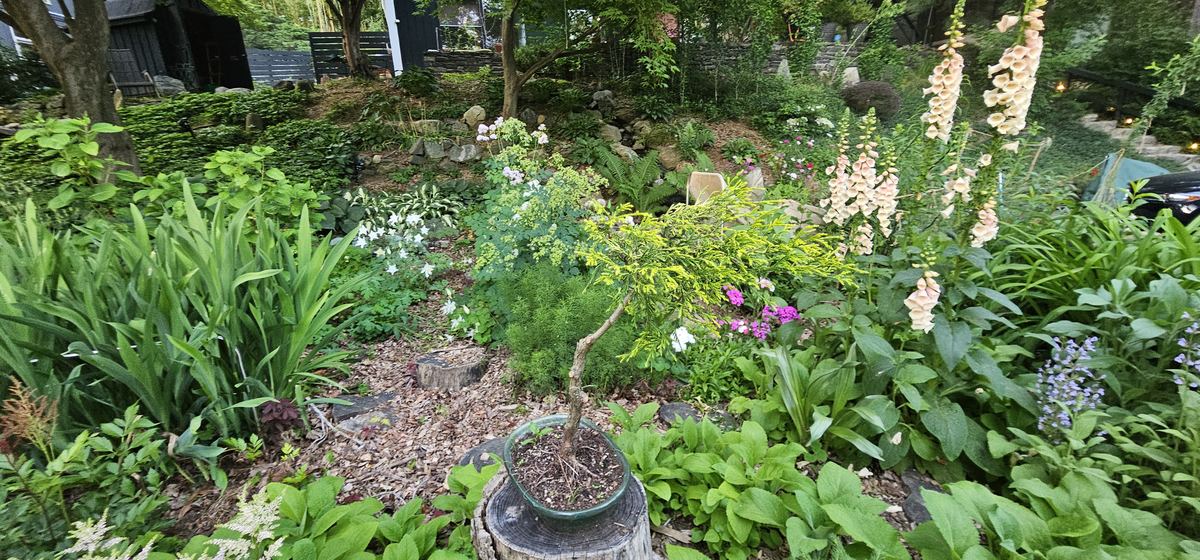
The garden in the demo is his: Mallard Rise, USDA Zone 7a, in the Eastern Temperate Forests ecoregion. Every photograph in it is real, and so are the mistakes.

Why native plants, and why this ecoregion
A plant belongs somewhere. Whether it thrives in a bed depends on that bed's light, moisture and soil; whether it feeds anything depends on where it evolved. GardenLab is deliberately narrow: its library covers the native flora of the Eastern Temperate Forests of North America, and its plant identification is tuned to the northeastern United States. Narrow means the facts can be checked, and each one is named to its source rather than blended into a score.
What it does not do, on purpose
It asks where the garden is only so it can know the climate, and it keeps the town, never your position. It does not sync unless you ask it to keep your garden online, and then it keeps only what you built. It does not show advertising. It will not tell you a plant is edible, safe, or medicinal; an identification is a suggestion about a photograph, and you are the one who confirms it.
Where it is going
Science knows a great deal about wild plants and very little about the ones in gardens: which natives persist in a suburban bed, which fail, when they flower and set seed year to year. That knowledge exists only as a dated, plant-by-plant record kept by the person who tends the bed. GardenLab is designed to make that record without making it a chore.
What that means today: nothing leaves your garden record for science, and the app has no feature that could send it. That is not modesty; the record has to exist first.
What it could mean later: if enough gardeners keep records, GardenLab may add a way to contribute observations to a public phenology or biodiversity project. It would be opt-in, per garden, with no location finer than ZIP, and it would be announced here before it exists.
Who it is being built with
Through autumn 2026 GardenLab is being used by small groups of gardening students, who put it through real gardens and report what breaks. If you would like to be one of them, or you run a garden club or a volunteer stewardship group and want to try it, write to hernan@pisano.pro.